The Sacred Legacy of Sage
The botanical name Salvia comes from the Latin "salvare" - to heal. In ancient Greece, sage held ceremonial significance beyond its culinary uses. Herbalists connected it to fertility, protection, and mental clarity.
Greek physicians prescribed sage for digestion, respiratory issues, and cognitive function. This wisdom passed through generations, mother to daughter, healer to apprentice.
Why Greek Sage Is Special
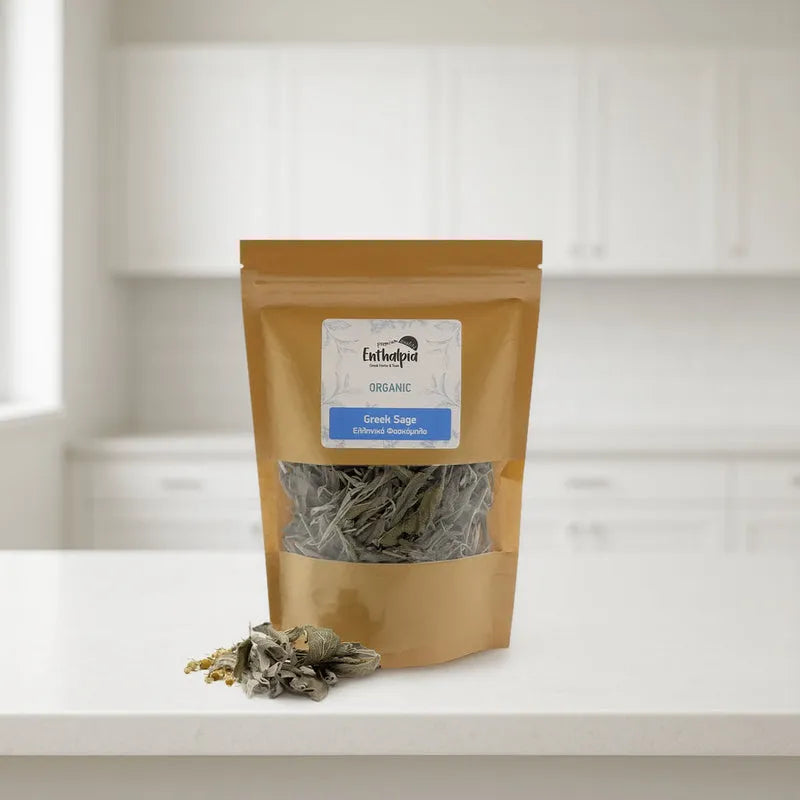
Salvia fruticosa - Greek sage - is uniquely potent due to Mediterranean growing conditions. The hot, dry summers and mineral-rich soil create a plant with concentrated essential oils and polyphenols.
Archaeological evidence of sage appears in ancient Minoan frescoes at Knossos Palace, dating back to roughly 1400 BCE. For over 3,400 years, this herb has held a place of honor in Greek culture.
What Science Tells Us
Modern research has explored sage's traditional uses:
- Antioxidants: Rich in polyphenols including rosmarinic acid
- Heart Health: Studies show improved cholesterol profiles with regular consumption
- Cognitive Support: Compounds may offer neuroprotective benefits
- Digestive & Respiratory: Traditional antimicrobial applications
Brewing Your Cup
Use one teaspoon of dried sage per cup. Steep in hot (not boiling) water for 7-10 minutes. The flavor is herbaceous and warming, especially lovely with a touch of Greek honey.
One to three cups daily is traditional. As with any herb, pregnant or nursing mothers should consult their healthcare provider.